Descrizione

Don Alberto era nato a Giussano il 22 febbraio 1940 e nel 1964, subito dopo l’ordinazione sacerdotale, giunse a Gallarate, dove rimase per 56 anni fino al giorno della sua morte cristiana il 20 agosto 2020.
A Gallarate ha fondato l’Associazione Scuola Aperta, uno tra i primi doposcuola nello spirito di don Lorenzo Milani, e l’Associazione Centro Culturale Teatro delle Arti, è stato professore di religione al Liceo dalla fine degli anni Settanta e responsabile di Zona della Caritas. Grande appassionato e conoscitore del Teatro e del Cinema, ha affrontato inquietudini del ‘68, poi la rabbia sociale degli anni ‘70, seguita dallo spavento del terrorismo e dal disincanto dei decenni più recenti.
Parroco a San Paolo Apostolo in Sciaré dal 1999 al 2007 e collaboratore dell’Ufficio per le comunicazioni sociali dell’Arcidiocesi di Milano dal 1993 al 2007.
Il Vescovo Giovanni Giudici ha ricordato che: “Dall’inizio e poi per tutta la sua vita egli è stato sensibile agli ideali limpidi, appassionato al bene e al bello. Sui temi del cinema e del teatro, che si trovò a lui affidati nell’attività pastorale e nella vita culturale cittadina, era diventato competente, ma con il suo stile di semplicità e di autoironia; realizzava iniziative impegnative e di successo ed era sempre schivo e riservato”. L’Arcivescovo Mario Delpini ha sottolineato “il suo sorriso, la sua cultura custodita in un animo semplice e incantato. Generoso fino alla prodigalità, libero fino all’ imprudenza, cordiale fino al culto dell’amicizia”.
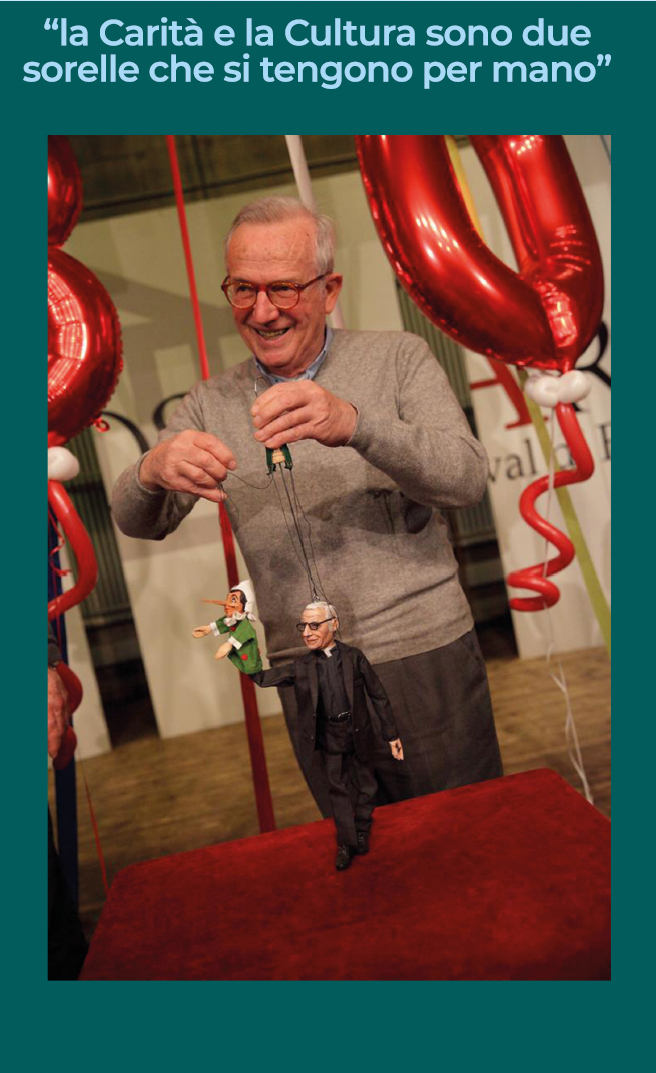
Don Alberto fu convinto sostenitore della sinergia fra Carità e Cultura: amava dire che “la Carità e la Cultura sono due sorelle che si tengono per mano”.
Il Cinema Teatro delle Arti nasce per volere di Monsignor Lodovico Gianazza nel complesso del Centro della Gioventù, che vede la posa della prima pietra nel 1958 e la benedizione della Sala il 5 maggio 1963 per opera dell’Arcivescovo Giovanni Battista Montini, futuro Papa Paolo VI.
La gestione della Sala venne affidata al giovane sacerdote Don Alberto Dell’Orto, il quale con passione, impegno e l’aiuto di molti amici, iniziò la programmazione teatrale e cinematografica, rendendo il Cinema Teatro delle Arti centro culturale della città, luogo di ritrovo e crescita di intere generazioni. Dalla prima stagione teatrale del 1969 (aperta da “L’inserzione”, di Natalia Ginzburg, con l’interpretazione di Adriana Asti, Franco Interlenghi e Mariangela Melato, diretti da Luchino Visconti), si sono succedute più di 50 stagioni, con la presenza di tutti i maggiori esponenti del Teatro Classico Italiano, legati a Don Alberto da stima e amicizia. Tutti i Teatri Stabili Italiani si sono avvicendati al Teatro delle Arti: lo stabile di Genova, di Bolzano, di Torino, ma, specialmente, il Piccolo Teatro di Milano e il Teatro Franco Parenti, con i quali si sono create collaborazioni importanti, così come con la Compagnia marionettistica Carlo Colla & Figli.
Ogni forma di teatro ha trovato spazio in questo luogo, quello classico, il cabaret, il teatro civile, il musical, il teatro ragazzi e per bambini e famiglie, perfino il teatro amatoriale delle compagnie del territorio. Il Teatro delle Arti è stato riconosciuto dal Ministero come Sala di Qualità e d’Essai per il Cinema e dal 1978 si svolge il Cineartiforum, che rimane una presenza fissa in Città. Negli anni ’70, è stato casa di una Scuola di Danza e di una Scuola di Teatro, nel 1987 ha visto la nascita di Filosofarti, Festival filosofico letterario che promuove la diffusione di relazioni tra arte e filosofia, e dal 2020 è nuovamente sede di una Scuola di Teatro che valorizza la vocazione all’attenzione per l’infanzia e per la gioventù.
Il Teatro delle Arti continua a costituire un palcoscenico per l’intera comunità cittadina, sempre pronto ad accogliere eventi di ogni genere e luogo di incontro della Comunità ecclesiale con quella civile. “Non rinunciamo ai sogni, quelli veri, possibili, che costano sacrifici, ma danno senso alla vita”
DON ALBERTO DELL’ORTO Don Alberto was born in Giussano on February 22nd, 1940 and in 1964, right after his priestly ordination, he arrived in Gallarate, where he stayed for 56 years until the day of his Christian death on August 20th, 2020. In Gallarate he founded the “Associazione Scuola Aperta”, one of the first after-school associations in the spirit of don Lorenzo Milani, and the “Associazione Centro Culturale Teatro delle Arti”. He was a Religion teacher at the Gymnasium since the 1970s and he was the manager of Caritas in the area. He was deeply fond of the theatre and of the cinema and he faced the 1968 anxieties, then the social anger of the ‘ì70s, followed by the fear of terrorism and the demystification of the most recent decades. He was Parish priest at San Paolo Apostolo Church in Sciaré from 1999 to 2007 and cooperator of the office for social communications of the Milan archdiocese from 1993 to 2007. The bishop Giovanni Giudici has remembered that: “Since the beginning and then throughout his whole life he was sensitive to clear ideals, passionate about the good and the fair. He had become an expert on the themes of the cinema and the theatre, which he was entrusted with in the pastoral activity and in the city cultural life, but with his style of simplicity and self-irony; he carried out demanding and successful initiatives and he was always shy and reserved”. The archbishop Mario Delpini has underlined “his smile, his culture kept in a simple and enchanted soul. Generous up to prodigality, free up to imprudence, friendly up to the cult of friendship”. Don Alberto was a committed supporter of the synergy between Charity and Culture: he loved to say that “Charity and Culture are two sisters holding hands”
TEATRO DELLE ARTI The “Cinema Teatro delle Arti” was born by the will of Monsignor Lodovico Gianazza in the ‘Centro della Gioventù, which saw the laying of the first stone in 1958 and the blessing of the film theatre on May 5th 1963, due to the archbishop Giovanni Battista Montini, later Pope Paul VI. The management of the cinema was entrusted to the young priest Don Alberto Dell’Orto, who with passion, commitment and the help of many friends, started the theatre and cinema programming, making the ‘Cinema Teatro delle Arti’ the cultural centre of the city, place of gathering and growth of entire generations. Since the first theatrical season of 1969 (opened by ‘L’inserzione’, by Natalia Ginzburg, with the interpretation of Adriana Asti, Franco Interlenghi and Mariangela Melato, directed by Luchino Visconti), more than 50 seasons have followed, with the presence of all the major exponents of the Italian Classical Theatre, bound to don Alberto by esteem and friendship. All the permanent Italian Theatres have alternated with the ‘Teatro delle Arti’: the permanent of Genoa, of Bolzano, of Turin, but, especially, the ‘Piccolo Teatro’ of Milan and the ‘Teatro Franco Parenti’, with whom important collaborations were created, as well as with the puppetry company ‘Carlo Colla & Figli’. Every form of theatre found space in this place, the classical, the cabaret, the civil theatre, the musical, the theatre for children, the young and families, even the amateur theatre of the companies in the area. The ‘Teatro delle Arti’ was recognised by the Ministry as a quality and art house room for the cinema and since 1978 the ‘Cineartiforum’ has taken place here, still being a permanent presence in the city. In the ‘70s it was home to a dance school and a theatre school, in 1987 it saw the birth of ‘Filosofarti’, a philosophical-literary festival which promotes the spread of relations between art and philosophy, and since 2020 it has been again the location of a theatre school which enhances the vocation to pay attention to childhood and youth. The ‘Teatro delle Arti’ keeps on building a stage for the entire city community, always ready to host events of any type and meeting place of the ecclesiastical community with the civil one.“Let us not give up our dreams, the true possible ones, which cost sacrifices, but give meaning to life”.
Traduzione in collaborazione con gli studenti del triennio dei Licei di Viale dei Tigli